"Internet and Utilities on Ecuador's Coast: A Practical Expat Setup Guide (2026)"

Setting up a home on Ecuador's coast isn't hard, but it is unfamiliar. Utilities are handled town by town, bills are paid in ways that surprise new arrivals, and internet quality varies block by block. What follows is the practical version, written for someone landing in Manta, Salinas, or a smaller surf town. None of it is complicated — but the sequence matters.
Electricity: CNEL EP
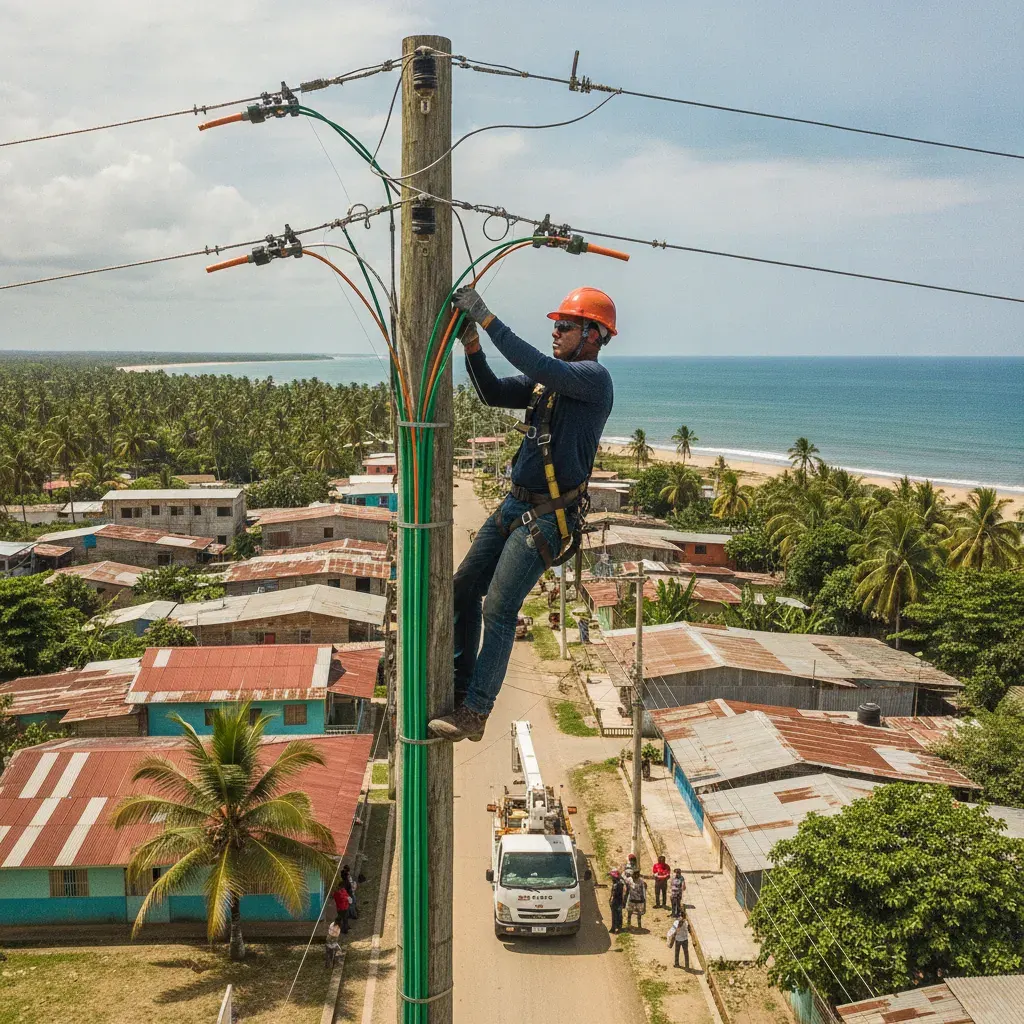
The state distributor CNEL EP serves most of the coast. Rates are low by US standards, and a modest apartment without air conditioning might run $15–40 a month. Add AC and you're looking at $60–200 a month in the hottest months — the single biggest utility swing for most expats. Outages happen, more often in rural areas and during storms; a power bank and a small inverter for your router go a long way.
Water: Town by Town
Water is managed by municipal companies, so service and quality differ from town to town. Interruptions are more common in the dry season, and many homes have rooftop tanks or cisterns to ride out the gaps. If you're renting, ask how the building stores water. Bottled or filtered water for drinking is the norm.
Internet: Check Before You Sign the Lease
Fiber is widely available in Manta, Salinas, and Guayaquil from providers like CNT, Claro, and Netlife, with plans commonly ranging from 100 to 500 Mbps. Smaller towns may only offer ADSL or fixed wireless radio — fine for email, painful for video calls. Starlink has become genuinely popular in surf towns and rural stretches, and it performs well when the sky is clear.
Before signing a lease, ask the landlord or a neighbor to run a speed test at the actual address. "Fiber available" and "fiber working in this apartment" are different claims, and the difference is your problem, not the provider's.
Mobile Service
The main carriers are Claro, Movistar, and CNT. Prepaid data is cheap, and topping up at a pharmacy or kiosk is easy. Most expats keep a local prepaid SIM in an unlocked phone rather than paying roaming. Coverage is good along the coast highway and in cities; rural stretches and some beach towns still have gaps. If you work remotely, consider two SIMs from different carriers.
Trash, Propane, and Other Essentials
- Trash collection runs on a municipal schedule — ask neighbors which days and where the truck stops. Recycling culture is limited; some towns have informal collection points.
- Propane gas for cooking is a delivery-cylinder culture. Your local distributor swaps cylinders at the door, so keep a spare and a little cash on hand.
- Paying bills can usually be done online through each utility's portal, at banks, or through payment agents like Servipagos and Pago Fácil.
Typical Monthly Utility Costs
| Item | Typical monthly range |
|---|---|
| Electricity (no AC) | $15–40 |
| Electricity (with AC) | $60–200 |
| Water | $5–20 |
| Internet (fiber) | $25–50 |
| Mobile (prepaid) | $10–25 |
| Propane (cooking) | Low and subsidized; refill prices vary by cylinder size and town |
Ranges vary by town, usage, and provider — verify current rates locally, as of late 2026.
First-Week Setup Checklist
- Photograph the meter readings on move-in day.
- Ask who the current providers are for power, water, and internet.
- Order internet service immediately — installation can take days or weeks.
- Buy a prepaid SIM and top it up.
- Locate the nearest payment agent or set up online bill pay.
- Ask a neighbor about trash days and propane delivery.
- Test water pressure and ask about dry-season patterns.
What This Means for Expats
Budget $100–250 a month for utilities in a typical coastal apartment without heavy AC use, and more if you run air conditioning around the clock. Prioritize internet verification before committing to any rental — it's the one utility that can't be fixed with a tank or a generator. And be patient with installation schedules; things get done on the coast, just rarely on the first promised date.
Last updated: September 2026. General information only — verify details with official sources before acting.
Keep Coastal Ecuador's daily expat briefing independent.
Reader support helps pay for reporting, translation, editing, hosting, and the daily work behind CoastalEcuador.