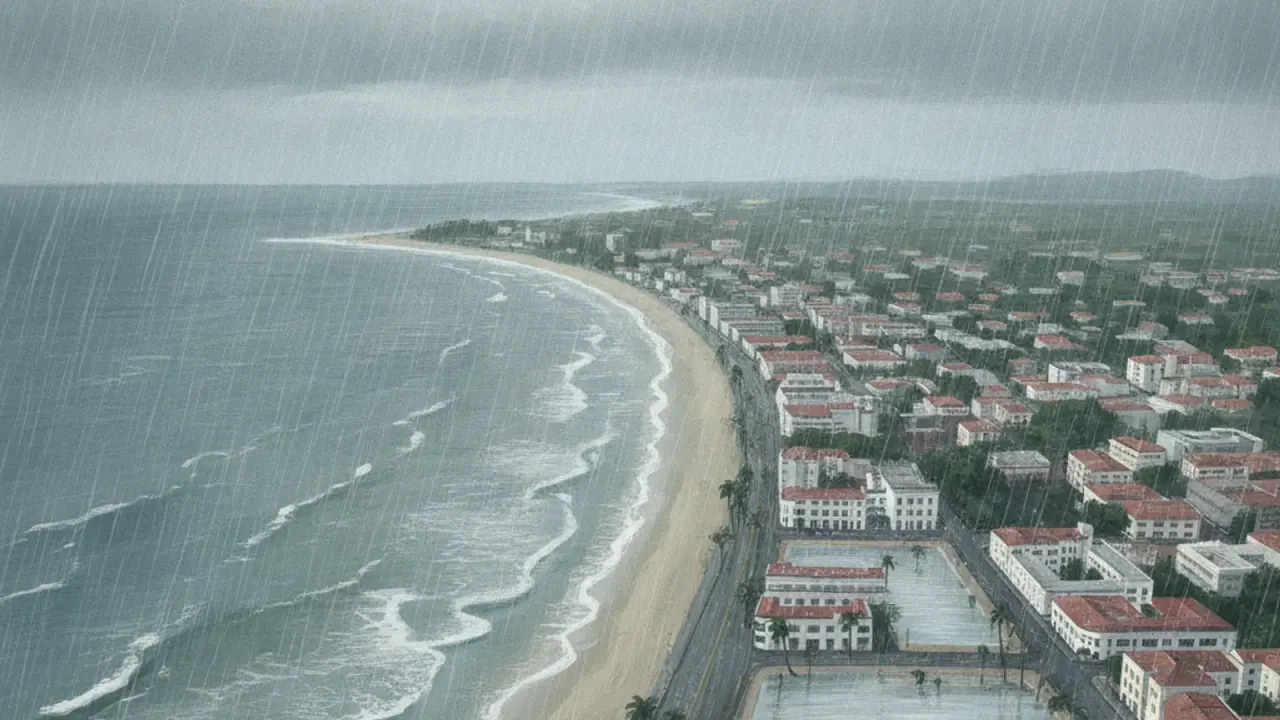
El Niño Road Risks and Power Supply Updates for Coastal Ecuador Expats


Ecuador is currently facing a dual challenge concerning its infrastructure and energy supply, both of which could impact daily life, particularly in coastal areas. A recent analysis by the Secretaría Nacional de Gestión de Riesgos indicates that a strong El Niño phenomenon could significantly jeopardize mobility across several provinces. The report identifies 3,113 kilometers of the State Road Network as having high exposure to either floods or landslides.
Specifically, about 1,870 kilometers of these roads are highly exposed to floods, while another 1,243 kilometers are in areas prone to mass movements such as landslides and collapses. For the Coast region, floods are identified as the primary threat to road infrastructure. Manabí province, a significant area for many expats, concentrates 740 kilometers of roads with high exposure to floods. Guayas follows with 594 kilometers, and Los Ríos with 222 kilometers. In contrast, the Sierra region's main risk is related to landslides caused by heavy rains.
The Ministry of Infrastructure has reported proactive measures, acquiring 73 units of heavy machinery, with 64 already delivered for road maintenance and intervention works. Some of these interventions are already underway on roads, including the Montecristi–La Cadena route in Manabí.
In parallel, Ecuador is navigating an "high risk" scenario regarding its electricity supply, as alerted by the National Electricity Operator (Cenace) on September 15, 2026. To address this, the government has enabled Elecaustro to provide an additional 200 megawatts (MW) of generation from two barges. Elecaustro confirmed the availability of these 200 MW on September 17, in addition to its existing 85 MW. This authorization, signed on September 18, 2026, allows the company to offer the additional power starting September 20. This measure is exceptional and temporary, valid as long as the operational conditions necessitating it persist. The 200 MW correspond to the total power of the Emre Bey and Erin Sultan barges and will be connected via the Esclusas–Caraguay 138 kilovolt (kV) line and the Esclusas 230 kV substation.
Furthermore, around 150 high-electricity-consuming companies and industries will experience one day of power cuts per week, beginning Tuesday, September 22, 2026. This measure aims to reduce electricity demand and conserve water in the Mazar reservoir, a key component of the national energy system, during the dry season. The disconnections will occur between Tuesday and Saturday, with the specific day varying for each company. Approximately 90% of these affected companies are located in Guayaquil and Durán.
What This Means for Expats
For expats living along Ecuador's Pacific coast in areas like Manta, Salinas, Montañita, Puerto López, Olón, Ayampe, Bahía de Caráquez, and Canoa, these developments highlight the importance of preparedness. The identified road risks, particularly flooding in Manabí and Guayas, mean that travel plans could be affected during periods of heavy rainfall associated with El Niño. It would be prudent to monitor local weather forecasts and road conditions before embarking on journeys, especially inter-provincial travel. Having alternative routes in mind or being prepared for potential delays is advisable. While the government is taking steps to mitigate road issues, the sheer scale of affected kilometers suggests that disruptions are possible.
Regarding electricity, while the immediate power cuts are targeted at high-consuming industries primarily in Guayaquil and Durán, the underlying "high risk" scenario for electricity demand suggests that broader energy conservation efforts or potential future adjustments could occur. Expats should be aware of the national energy situation and consider having contingency plans for power outages, such as backup power sources for essential devices, especially if living in more remote areas. Staying informed through local news channels about any changes in the energy supply situation is recommended. These measures are designed to stabilize the national grid, but awareness remains key for personal planning.
Sources: teleamazonas.com; extra.ec; teleamazonas.com.
Image: existing site image, illustrative.
Keep Coastal Ecuador's daily expat briefing independent.
Reader support helps pay for reporting, translation, editing, hosting, and the daily work behind CoastalEcuador.